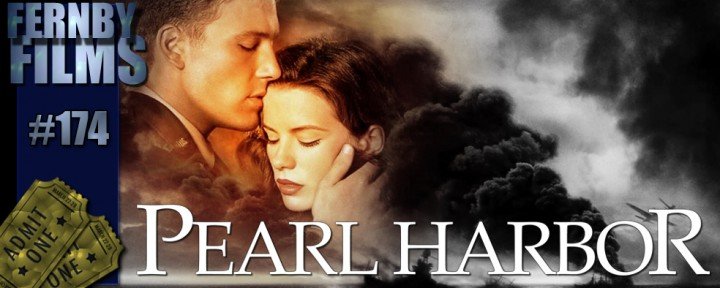
The silver screen has a magnetic pull, offering us grand narratives that often blend stunning visuals with sweeping human drama. Few historical events lend themselves to this treatment as powerfully as the attack on Pearl Harbor, a moment that irrevocably plunged the United States into World War II. For many, the 2001 blockbuster "Pearl Harbor" serves as a primary, if not sole, visual representation of that fateful day. But how much of what you saw on screen truly happened? The truth, as always, is far more complex than a two-hour epic can convey, and the historical accuracy and controversies in Pearl Harbor films – particularly the 2001 rendition – reveal a significant gap between cinematic spectacle and documented fact.
This guide will dissect the 2001 film's portrayal, separating the undeniable truths from the dramatic liberties, the profound historical moments from the outright fabrications. We'll explore why filmmakers make these choices and, more importantly, how you can navigate historical narratives in cinema to better understand the past.
At a Glance: Key Takeaways
- The 2001 film "Pearl Harbor" is a visually impressive spectacle but a historically problematic dramatization.
- It prioritizes romantic melodrama and dramatic license, often at the expense of factual accuracy.
- Numerous inaccuracies exist, from anachronistic technology and military protocols to fictionalized characters and battle details.
- The film accurately captures the scale of devastation, the attack's duration, and its immediate impact on U.S. entry into WWII.
- Significant contributions from minority groups, like Doris "Dorie" Miller, are largely overlooked.
- View "Pearl Harbor" as entertainment or historical fiction, not a reliable historical document.
- For genuine understanding, consult reputable historical sources such as academic books, documentaries, museum exhibits, and primary source documents.
Setting the Scene: December 7, 1941
Before we dive into the celluloid version, let's briefly remember the real event. On Sunday, December 7, 1941, at 7:55 a.m., a surprise aerial attack by the Imperial Japanese Navy struck the U.S. naval base at Pearl Harbor, Hawaii. This devastating assault, executed in two waves, crippled the Pacific Fleet, killed over 2,400 Americans, and injured more than a thousand. It destroyed 18 ships, including five battleships, and nearly 200 aircraft. The attack was a calculated risk by Japan to neutralize the U.S. fleet, buying time for their expansion throughout Southeast Asia, and it succeeded in its immediate destructive aims. Crucially, it galvanized a previously isolationist American public and propelled the United States into World War II, fundamentally altering the course of global history.
This raw, world-changing event offers an almost irresistible canvas for filmmakers, promising drama, heroism, and immense stakes. But how well did the 2001 film, starring Ben Affleck, Josh Hartnett, and Kate Beckinsale, live up to its historical responsibility?
Hollywood's Lens: The Allure and Peril of Dramatic License
Filmmakers often face a dilemma when tackling historical events: recreate them with meticulous accuracy, or adapt them to fit a compelling narrative structure? The truth is, most historical dramas aim for a blend, but the balance often tips towards "drama." A director might argue that their primary goal is to tell a captivating story that resonates with a mass audience, not to produce a documentary. This often means simplifying complex geopolitical situations, compressing timelines, inventing characters, or exaggerating real-life figures to fit archetypes.
For a film like "Pearl Harbor," the scale of the event demanded immense production value, and that often comes with an expectation of high drama and romance to draw viewers. The danger, however, is that for many, such films become the only source of information about a historical period. When inaccuracies abound, they can distort public understanding, perpetuate myths, or even trivialize real suffering and sacrifice. Understanding this tension is crucial when examining the 2001 film's choices.
The Big Picture: What "Pearl Harbor" (2001) Got Right (Mostly)
While often criticized for its historical liberties, the 2001 "Pearl Harbor" wasn't entirely devoid of truth. The film did manage to capture certain fundamental aspects of the attack, particularly its devastating impact.
First and foremost, the movie vividly portrays the widespread devastation inflicted on the U.S. fleet. The sinking or damage of numerous ships, the destruction of aircraft on the ground, and the horrific loss of thousands of lives are conveyed with a visual impact that, while dramatized, reflects the scale of the catastrophe. The sight of the USS Arizona exploding and sinking, for example, conveys a sense of the sudden, brutal reality faced by those on board.
The film also correctly identifies the attack duration, lasting approximately two hours, beginning early on December 7, 1941. This compressed, intense timeframe is accurately represented, emphasizing the suddenness and overwhelming nature of the assault. The chaos and shock that unfolded over those critical hours are central to the film's most impactful sequences.
Finally, the movie accurately depicts the immediate impact of the attack. It galvanized public opinion, leading the U.S. to abandon its isolationist stance and formally enter World War II. The scenes showing President Roosevelt making the decision to declare war, though perhaps simplified in their execution, convey the monumental shift in U.S. foreign policy that the attack necessitated. This moment fundamentally reshaped the 20th century.
However, these accurate broad strokes are often overshadowed by a multitude of specific errors and fictionalizations that make it challenging to recommend the film as a reliable historical account.
Where History Got Hijacked: The Film's Major Missteps
The 2001 "Pearl Harbor" film is notorious for its extensive list of historical inaccuracies. These range from glaring technological blunders to a complete reimagining of military protocols and personal narratives.
Anachronistic Tech & Battlefield Blunders
The film's visual spectacle, while impressive, often relies on technology that simply didn't exist in 1941.
- Future Tech on Display: You'll see Japanese warplanes launching from angled flight decks with jet catapults in the movie. In reality, these technologies weren't invented until the 1950s. Japanese aircraft carriers in 1941 used straight flight decks, and their planes were propeller-driven. Similarly, the long-range, crystal-clear radio communication, such as listening to the Doolittle Raid from Hawaii, is a product of later decades. Communication in 1941 was short-range and often silent to avoid detection.
- Targeting Errors & Memorial Mischief: The movie portrays Japanese forces targeting hospitals during the attack. Historically, hospitals were typically considered neutral zones during wartime and were not primary objectives. This depiction not only misrepresents the conduct of the attack but also paints a potentially misleading picture of wartime ethics. Moreover, a poignant shot in the opening shows the USS Arizona Memorial, which wasn't built until 1962, over 20 years after the attack. Its inclusion, while emotionally resonant, is anachronistic.
- Vehicles Out of Time: Keep an eye out for a Jeep model featured in the film that wasn't actually used until the Korean War era of the 1950s. Another visual slip involves the Queen Mary ship, depicted in its peacetime paint scheme. By 1941, this iconic ocean liner would have been camouflaged gray for wartime service, not her elegant passenger colors.
Fictional Fliers & Protocol Problems
The central characters and their military careers are prime examples of the film prioritizing dramatic convenience over historical reality.
- Illegal Enlistment: Rafe McCawley, one of the film's protagonists, joins the British Royal Air Force's Eagle Squadron while America remains neutral. While some Americans did volunteer, it was technically illegal for U.S. citizens to do so before America entered the war. His enlistment and subsequent return were far more complex and legally fraught than the film suggests.
- Military Malleability: Rafe's easy transition between the Army Air Force and the Navy is another significant departure from reality. During WWII, military training and service protocols were rigid. Such cross-service transfers, especially for pilots in critical roles, were not possible or at least not as casually executed as depicted. The film takes considerable liberties with military procedures, chain of command, rank, and responsibilities, often overemphasizing individual heroism in a way that downplays the collective, disciplined effort that characterized actual military operations.
The Love Triangle That Ate History
Perhaps the most criticized aspect of the 2001 film is its central romantic plotline.
- Pure Invention: The love triangle between Rafe McCawley, Evelyn Johnson (a nurse), and Danny Walker is almost entirely fictional. It was created purely for dramatic effect and has no historical basis in the lives of any real individuals present at Pearl Harbor.
- Overshadowing True Valor: This fabricated romance, while perhaps designed to be emotionally engaging, unfortunately overshadows the true stories of heroism, sacrifice, and immense personal loss that characterized the real attack. Many critics argued that the film spent too much time on a contrived romance and not enough on the human stories directly tied to the historical event.
Simplified Leaders & Stereotypical Stories
Historical figures, when portrayed in film, often undergo a transformation for dramatic impact, sometimes veering into caricature.
- Roosevelt and Kimmel: The portrayal of historical figures like President Franklin D. Roosevelt and Admiral Husband E. Kimmel is often simplified and dramatized in the film. While aiming for impact, these depictions can reduce complex leaders to single dimensions, failing to capture the full scope of their challenges and decisions.
- One-Sided Perspectives: The film presents a distinctly one-sided American perspective, lacking a nuanced understanding of Japanese motivations or strategic considerations. Japanese pilots are often portrayed simplistically, denying the complex cultural and political factors that led to the attack. This simplification can prevent a deeper, more empathetic understanding of the broader conflict.
The "Awareness" Fallacy & Roosevelt Conspiracy
A persistent misconception often fueled by dramatized accounts concerns the level of U.S. awareness prior to the attack.
- Not Completely Unaware: While American intelligence certainly failed to predict the exact timing and location of the attack, the movie's depiction of the U.S. being completely unaware of rising tensions is inaccurate. There were numerous warnings and growing concerns about potential Japanese aggression in the Pacific, even if the precise nature and target of the attack remained unknown.
- The Roosevelt Conspiracy: The film, like some other narratives, touches on the idea that President Roosevelt knew about the impending attack and allowed it to happen to bring the U.S. into the war. It's crucial to state that there is no credible evidence whatsoever for this conspiracy theory. Historical records, intelligence reports, and post-war investigations consistently show that while intelligence was fragmented and misinterpretations occurred, there was no foreknowledge of the specific attack on Pearl Harbor by Roosevelt or his top advisors.
The Doolittle Raid Reimagined
The film's depiction of the Doolittle Raid, a retaliatory air raid on Tokyo, also takes significant dramatic liberties.
- Compressed Timeline, Exaggerated Roles: The Doolittle Raid is presented with considerable dramatic license, compressing the timeline of events and overemphasizing the roles of individual characters like Rafe and Danny. The actual raid involved 16 B-25 bombers and 80 crew members, with a much more complex set of challenges and consequences than the film's simplified narrative allows for. The real story is one of collective courage and ingenuity under extreme pressure, not just a couple of familiar faces leading the charge.
Forgotten Heroes: Voices Left Out
Another significant criticism leveled against the 2001 "Pearl Harbor" film, and indeed many historical dramas, is its tendency to overlook the contributions of individuals and groups who don't fit into the dominant narrative.
The film largely overlooks the vital contributions of African Americans and other minority groups during the attack and the war that followed. A prime example is Doris "Dorie" Miller. Miller was an African American mess attendant on the USS West Virginia who, during the attack, famously manned a .50 caliber anti-aircraft machine gun, for which he had no prior training, and shot down Japanese planes. He also moved his wounded captain to a safer spot and helped rescue other sailors. For his extraordinary bravery, he was awarded the Navy Cross, becoming the first African American to receive this honor in World War II.
Miller's story is a powerful testament to the diverse acts of heroism that occurred that day, often from individuals whose roles in the military were circumscribed by racial discrimination. By focusing predominantly on its fictional white protagonists, the film misses an opportunity to tell these equally, if not more, compelling real-life stories that reflect the broader fabric of American society during the war.
Beyond the Blockbuster: Seeking Genuine Understanding
Given the extensive list of inaccuracies, how should you approach films like "Pearl Harbor" (2001)? The most crucial actionable insight is to view "Pearl Harbor" as an entertainment product or historical fiction, not a reliable historical document. It can serve as an engaging introduction to the general idea of the Pearl Harbor attack, but it should never be your sole source of information.
For an accurate and comprehensive understanding of the attack on Pearl Harbor, it's essential to consult reputable historical sources. Here's how you can deepen your knowledge:
- Academic Books and Scholarly Articles: Look for works by historians specializing in World War II or naval history. These are rigorously fact-checked and provide nuanced analysis.
- Documentaries: Seek out documentaries produced by reputable organizations (e.g., PBS, History Channel, National Geographic) that feature expert interviews, archival footage, and primary source materials.
- Museum Exhibits: Visiting institutions like the National WWII Museum in New Orleans, the Pearl Harbor National Memorial in Hawaii, or the National Museum of the Pacific War in Fredericksburg, Texas, offers immersive, fact-based experiences. These sites provide firsthand accounts, artifacts, and expert interpretations.
- Primary Source Documents: For a direct connection to history, explore archives like the National Archives and Records Administration (NARA). You can find official reports, letters, photographs, and oral histories that offer unfiltered perspectives.
- Alternative Films and Series: While the 2001 movie is a major entry, you might want to Explore Pearl Harbor Movies from other eras or genres for different perspectives. Some earlier films or miniseries might offer a more historically grounded approach, even if they too take some liberties.
By engaging with these diverse sources, you move beyond the simplified narratives of Hollywood and gain a much richer, more accurate appreciation for the complexities, sacrifices, and profound impact of the attack on Pearl Harbor.
Your Next Step: Engaging with History Responsibly
Understanding the historical accuracy and controversies in Pearl Harbor films is more than just nitpicking Hollywood. It's about developing critical media literacy. When you watch any historical drama, train yourself to ask: "What are they showing me? Why are they showing it this way? What might be missing?"
The attack on Pearl Harbor was a pivotal moment, a testament to both human vulnerability and resilience. While a blockbuster film can provide an emotional connection to such an event, the true power of history lies in its unvarnished details, its complex characters, and the lessons learned from the past. Embrace the dramatic spectacle for what it is—entertainment—but commit to seeking out the genuine story from those who lived it and those who have dedicated their lives to uncovering its truths. This dual approach allows you to appreciate the art of storytelling while remaining grounded in the facts that truly shaped our world.