The attack on Pearl Harbor on December 7, 1941, remains one of history’s most pivotal moments, catapulting the United States into World War II. For over eight decades, filmmakers have grappled with this cataclysmic event, attempting to capture its scale, its human cost, and its profound impact. From sweeping epics to intimate dramas, these movies offer a cinematic window into the "day of infamy," each presenting unique perspectives and unforgettable sequences. But which moments truly stand out? Which scenes etched themselves into the collective memory, defining how we visually remember Pearl Harbor?
This guide dives deep into the Best Scenes and Iconic Moments from Pearl Harbor Movies, dissecting what makes them so compelling, from raw historical accuracy to breathtaking special effects and deeply moving human drama.
At a Glance: What Makes a Pearl Harbor Movie Scene Iconic?
- Visceral Depiction of the Attack: The sheer chaos and destruction that unfolded on December 7th.
- Emotional Resonance: Scenes that capture the shock, grief, courage, and resilience of those involved.
- Historical Accuracy (or Deliberate Departures): How well (or loosely) a film interprets factual events.
- Groundbreaking Visuals/Effects: Moments that pushed cinematic boundaries at the time.
- Memorable Character Arcs: When individual stories powerfully intersect with the larger historical narrative.
- Unique Perspectives: Depictions from the Japanese side, or unexpected angles like sci-fi elements.
Decades of Cinematic Storytelling: Replaying the Day of Infamy
The story of Pearl Harbor has been told and retold, each generation of filmmakers bringing new technologies and interpretations to the screen. From immediate post-war propaganda to modern blockbusters, these films chronicle not just the attack itself, but also the evolving societal understanding of its legacy.
Pearl Harbor (2001): The Spectacle and the Heartache
Michael Bay’s ambitious 2001 blockbuster, Pearl Harbor, aimed for a grand scale, weaving a love triangle into the backdrop of war. While its historical accuracy has been debated, its depiction of the attack is undoubtedly one of the most exhaustive and visually arresting.
The Unrelenting Aerial Assault
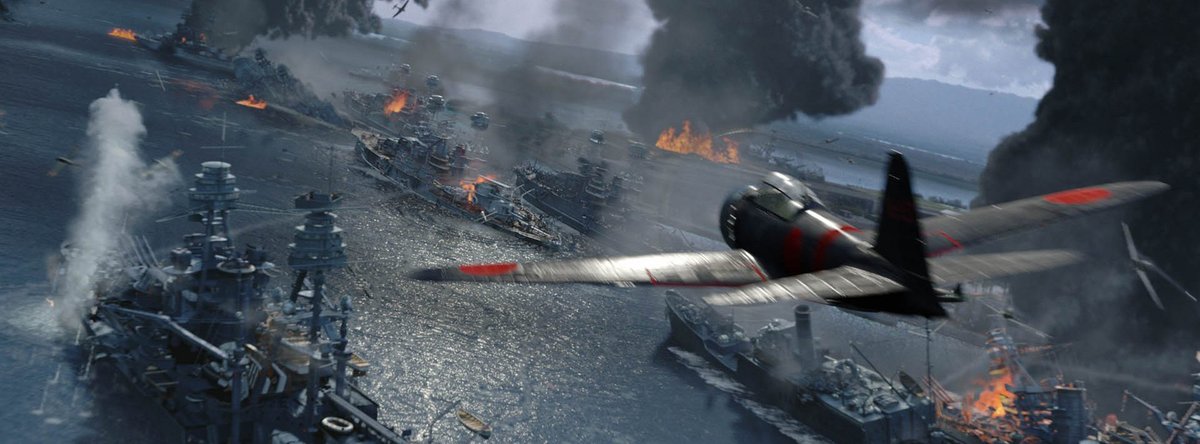
The heart of Pearl Harbor lies in its nearly 40-minute sequence depicting the Japanese air raid. This wasn't just a scene; it was a full-blown cinematic event. From the first waves of torpedo planes skimming the water to the dive bombers unleashing havoc on battleships and airfields, the film captures the terror and disorienting chaos. The iconic moments here are numerous:
- The initial surprise: Japanese planes appearing suddenly over the horizon, catching the American forces completely off guard. The shot of a sailor enjoying a tranquil morning suddenly looking up in disbelief as a fighter plane screams past is chilling.
- USS Arizona’s destruction: The catastrophic explosion of the USS Arizona, a real-life horror that claimed over 1,100 lives, is rendered with brutal, fiery detail. Seeing the ship rip apart, engulfed in flames, serves as a powerful symbol of the attack's devastation.
- The scramble for defense: Pilots (like Rafe McCawley and Danny Walker) rushing to their planes, dogfights erupting in the skies, and sailors desperately trying to man anti-aircraft guns. These moments highlight the desperate, last-ditch efforts to fight back against an overwhelming force.
Despite criticisms of its romantic subplots, the attack sequence itself is a masterclass in large-scale destruction and earned its place as a definitive, if stylized, cinematic portrayal of that day. If you're looking to delve deeper into the different cinematic interpretations of the Pearl Harbor attack, this film offers one of the most extensive visual experiences.
Tora! Tora! Tora! (1970): The Meticulous, Dual Perspective
Almost three decades after the actual attack, Tora! Tora! Tora! (Japanese for "Tiger! Tiger! Tiger!", the signal for a successful surprise attack) offered a meticulously researched and balanced account. A joint American-Japanese production, it painstakingly recreated the events leading up to and including the bombing from both sides, aiming for historical accuracy over dramatic flair. It even earned an Oscar for Best Special Effects, remarkable for its time.
The Calm Before the Storm and the Signal
Tora! Tora! Tora! excels in building tension through bureaucratic blunders and missed signals.
- The P-40 Alert: An early, unsettling moment comes when two U.S. Army Air Corps radar operators detect a large flight of planes heading towards Oahu but are dismissed by a skeptical lieutenant who believes they are friendly B-17s. This agonizing miscommunication perfectly illustrates the unpreparedness.
- Admiral Yamamoto's Foreboding: The film poignantly portrays Admiral Isoroku Yamamoto’s deep reservations about the attack, famously stating, "I fear all we have done is to awaken a sleeping giant and fill him with a terrible resolve." This line, delivered with quiet gravity, encapsulates the strategic foresight and the heavy consequences of the decision.
- The "Tora! Tora! Tora!" Call: The precise moment the signal is sent, confirming total surprise, is a chilling and iconic audio-visual cue. It’s a stark, almost clinical declaration of success for the attackers and impending doom for the defenders, emphasizing the operational brilliance of the Japanese plan and the U.S. failure to detect it. This attention to detail makes it a go-to for many historians and enthusiasts wanting to understand the historical nuances of Pearl Harbor films.
From Here to Eternity (1953): Love, Loyalty, and Looming War
Fred Zinnemann's From Here to Eternity is less about the bombs dropping and more about the human drama unfolding in the days leading up to December 7th. A powerful romance and wartime drama, it explores themes of integrity, illicit love, and the harsh realities of military life, all set against the backdrop of an unsuspecting Hawaii.
The Beach Kiss
Perhaps the most famous scene from any Pearl Harbor-related film, though not directly depicting the attack, is the passionate kiss between Sergeant Milt Warden (Burt Lancaster) and Karen Holmes (Deborah Kerr) on a Hawaiian beach. With waves crashing over them, their embrace is a cinematic symbol of forbidden desire and desperate longing, made even more poignant by the impending catastrophe. This scene is iconic because it represents the ordinary lives and loves that were about to be shattered by the war, capturing a fleeting moment of beauty before the storm. It’s a powerful reminder of the human stories at the heart of historical events.
Midway (2019): The Aftermath and Retribution
While primarily focused on the pivotal Battle of Midway, Roland Emmerich’s Midway begins by showcasing the direct aftermath of Pearl Harbor and the subsequent American resolve. The film emphasizes the strategic thinking and daring actions that led to a turning point in the Pacific theater.
The Doolittle Raid Briefing
After the devastating blow at Pearl Harbor, America needed a morale boost and a way to strike back. A critical moment in Midway is the tense briefing for the Doolittle Raid. Lieutenant Colonel Jimmy Doolittle (Aaron Eckhart) lays out the audacious plan to launch B-25 bombers from an aircraft carrier – a mission with extremely low odds of survival and return. This scene highlights the desperation and courage of the U.S. military, demonstrating their immediate commitment to retaliate. It's a key example of how movies set around Pearl Harbor can capture the immediate response and explore the broader impact of the initial attack.
The Final Countdown (1980): A Time Traveler's Dilemma
This unique sci-fi film starring Kirk Douglas takes a modern U.S. Navy aircraft carrier, the USS Nimitz, back in time to December 6, 1941, the day before the attack. The crew, armed with advanced technology, grapples with the ethical dilemma of whether to intervene and change history.
The F-14 vs. Zero Encounter
One of the most thrilling and thought-provoking scenes involves modern F-14 Tomcat fighters encountering Japanese Zeroes from 1941. The sheer technological disparity is stark. The F-14s easily outmaneuver and destroy the Zeros, but the pilots are torn between their duty to protect American lives and the potential catastrophic consequences of altering the past. This sequence is iconic for its speculative "what if" scenario, brilliantly illustrating the magnitude of the Pearl Harbor attack by showing how easily it could have been prevented with foreknowledge and advanced weaponry, yet exploring the profound implications of such an act. It's a dramatic highlight for anyone fascinated by alternative histories and the unique narratives that spring from the Pearl Harbor story.
I Bombed Pearl Harbor (1960): The Japanese Perspective
Originally a Japanese film titled Hawaii Midway Battle of the Sea and Sky: Storm in the Pacific, this movie offers a rare and crucial perspective: that of the Japanese pilots who carried out the attack. It follows a Japanese naval aviator through both the triumph at Pearl Harbor and the later defeat at Midway.
Preparing for the Unknown
While less bombastic than Hollywood depictions, the film’s iconic moments often center on the stoic determination and meticulous preparation of the Japanese forces. A particularly compelling scene depicts the pilots briefing and readying themselves for the Pearl Harbor mission. The quiet resolve, the precise coordination, and the gravity of their objective are conveyed without excessive melodrama. This humanizes the "enemy" and provides insight into their motivations and professionalism, moving beyond simple villainy to show the calculated military operation from their viewpoint. It’s an invaluable counterpoint to purely American-centric narratives.
In Harm’s Way (1965): Post-Attack Resilience
John Ford’s In Harm’s Way is a sprawling drama set immediately after the attack, focusing on the leadership and personal struggles of naval officers, particularly Captain Rockwell Torrey (John Wayne). While it depicts moments of the attack, its strength lies in showing the immediate aftermath and the complex human reactions to it.
The Grim Aftermath and Torrey's Resolve
A standout scene captures the immediate desolation after the attack, with ships burning and rescue efforts underway. Captain Torrey navigates this grim landscape, witnessing the destruction firsthand. His hardened, stoic response – a grim determination to fight back – becomes iconic. It’s not about heroics during the attack itself, but about the steely resolve forged in its wake, embodying the American spirit of bouncing back from adversity. This movie helps illustrate the lasting impact of Pearl Harbor, even for those not directly on the battleships.
They Were Expendable (1945): Beyond Pearl Harbor's Immediate Shadow
Released very soon after WWII, John Ford's They Were Expendable focuses on the early, desperate days of the war in the Philippines, depicting PT boat crews fighting against overwhelming Japanese forces. While not centered on Pearl Harbor, it's set in its immediate aftermath and captures the initial, difficult phase of the conflict sparked by the attack.
The Desperate Evacuation
An iconic moment comes during the chaotic evacuation and the desperate fight to hold ground against a superior enemy. The film powerfully conveys the feeling of being "expendable," showcasing the courage of small units facing impossible odds. It’s a vivid portrayal of the raw, brutal fighting that followed Pearl Harbor, as American forces grappled with the early Japanese advances. The focus shifts from the attack itself to the grueling, everyday combat that became the new reality.
Air Force (1943): Flying into History
This early war film follows the crew of a B-17 bomber named "Mary-Ann," which is ironically scheduled to land at Hickam Field, Hawaii, on December 7th, 1941, during the attack. The film captures Hollywood's wartime spirit, emphasizing American resilience and the bravery of its service members.
Landing Amidst the Attack
The most compelling and iconic scene in Air Force is the harrowing sequence where the "Mary-Ann" attempts to land in the midst of the Japanese air raid. The crew, expecting a peaceful landing, suddenly finds themselves under fire, navigating a chaotic airspace filled with enemy planes and explosions. This unique perspective – flying into the attack rather than being on the ground – offers a fresh and terrifying viewpoint, highlighting the sheer shock and confusion of that day. It's a testament to the quick, impactful storytelling of early wartime cinema.
December 7th (1943): The Suppressed Story
Named simply after the date of infamy, December 7th won an Oscar for Best Documentary Short. However, due to its depiction of U.S. military unpreparedness and some fictional elements, almost an hour of footage was cut by the War Department. The surviving version remains a powerful, if incomplete, document.
The Unseen Footage's Shadow
While specific "scenes" from the surviving, censored version are less universally known, the very story of its suppression makes it iconic. The knowledge that a film made so close to the event contained "dangerous" truths about lax security and misjudgments creates an aura of unseen, powerful moments. The remaining footage often emphasizes the everyday activities suddenly shattered by the raid, hinting at the scenes that originally painted a starker picture of the pre-attack complacency. This film, in its very existence and alteration, is an iconic moment in the history of Pearl Harbor films, sparking discussions about historical truth versus wartime morale.
Beyond the Bombs: Why These Moments Endure
The enduring power of these scenes goes beyond their dramatic impact. They serve as cinematic touchstones, allowing us to revisit, understand, and reflect on a monumental event that reshaped the world. Each film, through its chosen moments, contributes to our collective memory of Pearl Harbor—be it the terror of the initial assault, the quiet resolve of leaders, the desperate scramble of defenders, or the human cost of war.
From the raw spectacle of a battleship exploding to the poignant silence of a commander contemplating the future, these are the moments that truly define cinematic Pearl Harbor. They compel us to remember the past, learn from its lessons, and honor the sacrifices made on that unforgettable day. To fully appreciate the diverse ways this event has been portrayed, we encourage you to explore the full spectrum of movies about Pearl Harbor and find your own iconic scenes.